Welcome to our website !
I realize that I'm almost at the extreme of the spectrum when it comes to talk of everyday health.
  • I do a lot of sport
  • I am studying to be a naturopath
  • I make absolutely bizarre cures for most people (detox juice cure, birch sap cure ...)
  • Je mange bio & local
  • So I rarely set foot in a supermarket
  • My bathroom is filled with organic & natural products
  • I read books of interest only hippies & survivalists
In short, it can quickly become boring or discouraging when you're at the other end of the spectrum. And yet I have been too. I ate no matter how (cuckoo week and the week of burger cheese at every meal ...), I smoked, I drank eight cups of coffee a day and ate chocolate croissants to small dej.
DeathtoStock_EnergyandSerenity2
It does not change everything overnight, just to insert new habits to replace the old, as you go.
You can for example: 
  • Stop sweeten coffee (it was promised that very soon)
  • Replace coffee with the tea or herbal tea
  • Replace the bread in the morning with fruit and nuts 
  • Make a meal (or a day) without meat 
  • Try a new sport
  • Go running two kilometers
  • Testing a restaurant organic, vegetarian or even raw food
  • Make the market this weekend
  • Meditate for 5 minutes
  • Start a gratitude diary
  • Find a nice book in the health department of your favorite bookstore
  • Replace crackers by the Bread of Flowers 
  • Make a smoothie
  • If buying vitamins
  • Spend at least one hour outside each day
  • Switch off the phone  to be in the present moment
  • Take the bike instead of the subway
  • To bed 30 minutes earlier tonight
These are the addition of these small actions that allow you to gradually change lifestyle, one foot before the other and one thing at a time ðŸ˜‰
And you then have you changed some habits in recent months? If so, which?

CREATE A GOOD HABIT BY 8 POINTS
With the arrival of spring, we all want to take good habits: eat better, get to the sport, stop smoking ... It's always easier to think of it, but harder to get started!
I have a technical 8-point rather simple, that I apply when I want to learn a new habit, so if you want to change your life, it starts now!
change-of-job

1. Be realistic

Create a new habit takes time, the rule of 21 days does not necessarily apply to everyone!
For some it will take 10 days for other months, be cool with you and assume that there will be days when you will fail. The important thing is to get back on track the next day!

2. A habit is practiced daily

So never spend more than two days without integrating your new habit to your schedule!
If you put yourself in sport: try to do a little every day (walking 10,000 steps, to stretch, go to the room)!
Go slowly, but do your usual non-negotiable part of your day.

3. habit at a time

Set up multiple new habits at the same time, the risk of being rapidly in a situation of failure because your brain and your body will not be prepared to so many changes in such a short time!
So you choose one, you are standing there, and when it is well integrated into your daily life and you will feel more compelled to follow you, you can go to the next!

4. Write out your goals and your desire to change

Whether on a blog, a book or a document on your computer, write down what you want to change and why you want to change!
Consult this document at least once a week, you will return in the positive spirit that you had when you decided to change something in your life!

5. Talk around you

It's super important: tell your friends, your family, your spouse that you want to change and you need them in this change.
They will be your fans and most importantly, you will feel responsible for the success of this change!

6. Reward yourself!

Do not hesitate to provide you a small reward to the key moments of your habit change (1 week, 1 month, 3 months, for example)!
A new pair of sneakers, a massage, a dinner, plan a good time to congratulate yourself for your change. In short, make your first bear!

7. Have a plan for hard times

The routine in which we live that it is often difficult to establish a new habit: too much stress, too much work or simply a busy family life, these barriers will often compete with your new habit.
So plan now plan: for example, for a week you have to leave on a business trip and you can not always eat healthily or exercising, you agree immediately on your training schedule and meal of following week!

8. Keep track of your progress

I have already spoken here, I use the app Way Of Life to tracker my progress and my failures, I filled every night and I can see what areas I progress as well as those on which I can improve !
Whether you use an app, an Excel spreadsheet or notebook, the important and keep track of your changes! This will be a great motivator in hard times!
And you then? What good habits you want to take for this spring?
I have to swim more, drink less beer and eating fewer fries :)

Most of you who read this blog regularly know, I decided there is now one year to reorient myself professionally to become a naturopath.
I get a lot of emails about naturopathy lately and that's a good sign! So I decided to explain in more detail what naturopathy, what courses to follow and give you a naturopathic list if you wish to consult!
photo_tarifs_page
Source: naturopathie-harmonie.fr

1. Naturopathy: what is it?

Being naturopath is to work on the lifestyle of the person and make the active primary prevention.In summary we are health educators who are trying to help people become better actors of their health by reforming their lives daily.
The naturopath uses various techniques:
  1. The alimention or nutritional hygiene
  2. Psychology  (relaxation, stress management, relational hygiene, counseling, brief psychotherapy, relaxation therapy, ...)
  3. Physical exercise (gymnastics, yoga, fitness ...)
  4. Hydrology (sauna, steam room, hot baths-froids- derivatives ...)
  5. Manual techniques (non-medical massages, ointments ...)
  6. Reflexology  (applied to the foot, ear, nose, back, shiatsu, Knapp methods ...)
  7. Breathing techniques (Bol Jacquie r ...)
  8. Plant science and aromatology (essential oils, Bach flowers)
  9. The energy techniques (magnetism, working with magnets)
  10. Vibrating technical s (use of color, solar radiation, music).
The naturopath occasionally works with natural nutritional supplements as part of a strategy cures (detoxification, revitalization, stabilization) to improve the client's field.
During a consultation, the naturopath establishes a health check  to estimate the vital energy of an individual through its constitutional and temperamental portrait. Different techniques can be used such as morphological assessment (which is based on the person's constitution, or iridology)
Depending on the vitality available, the naturopath will support its consultant or refer allopathic doctor in an emergency.
Following the balance sheet, the naturopath will establish a vital hygiene program that  will include tips for better nutritional health to better relax or manage stress better and to practice physical exercises essential to health. It also includes other techniques using reflexology advice, hydrology or breathing, plants, food supplements, or energy technology.
I have often said here, consult a naturopath has changed many things in my life, allowed me to see a number of ideas on health, and to put me up at a time when I was on the edge of burnout.
The consultation costs between € 80 and € 120 (fairly approximate range but do not hesitate to ask the price of the consultation when you take appointment). You will usually need a consultation, and this is an excellent investment to make for your health and your well-being every day!
In addition, some mutual consultations now reimburse naturopathic so please check if yours proposes.
naturopathy-image
Source : eugenehe.com

2. Become a naturopath

Naturopathy to date, is not yet a regulated profession, so there are a number of formations (which I personally find quite risky) by mail ...
If you want to get started in business naturopath, I absolutely recommend choosing a college affiliated with the FENAHMAN  (French Federation of Naturopathy Schools). This will ensure quality training with a common platform to all naturopathic health practitioners. There is a federal review to which all students are subjected, which guarantees the reliability and professional ethics of future naturopaths.
I chose to follow the teaching of ISUPNAT (I speak in more detail here) and I am delighted with my choice! However I would strongly advise you to visit different schools and choose the one in which you feel better!
naturopathy
Source: atms.com.au

3. Choose naturopath

To find a practitioner near you, you can use the site of the OMNES (Organization of Natural Medicine and Health Education) who exercises since 1981.
If you are in Paris or the Paris region, I can only recommend Marie Cammarata, Frédéric Boukobza  or Isabelle Gomez. I am fortunate to benefit from their education and their advice and they are really top!
I hope this article has helped you! Do not hesitate to ask questions in the comments and I take the opportunity to edit the article if necessary!

Well, I'm champion of meditation, play sports often, eat well and be more organized, I'm anxious for super kind.
I think my way to fight it is just a lot of work, although organize myself and stick to a strict schedule to avoid panicking when I end up with significant deadlines on big projects.
DeathtoStock_London2
Yet sometimes life that I fully panic and I wake up having only one desire: to do a Game of Thrones marathon at the bottom of my bed all day (and we will not lie, it happens! )
Over the years I have developed some simple reflexes in those moments when I feel that everything on the lam, suddenly I thought it might help you to share them with you!

1 / Take time for yourself waking

Do not turn on the phone or read emails at the exit of the bed Take the time to make a tea or coffee and write a little to do list of things to do in the day. I put 3-5 things to do, never more, and organize them in priority order.
Typically it allows me to put things in perspective and organize my day calm & rationally.

2 / Getting rid of stressful things from the start of the day

All the most important / stressors of my to do should be treated first. I take the time to read and respond to my emails and then I spend an hour or two to make them. Result: a relieved and clearer mind for the rest of the day!

3 / If decentralize> If refocus

This is a key point of hyper. You can always find something better to do when anxiety, especially one becomes champion of procrastination: eg my apartment is never as clean as when I'm anxious😉
So as soon as I see that I distract myself, I leave directly on the task I had to finish. No need to flog, it happens to the best of us, the key is to give them as soon as we become aware that we have lost the thread!

4 / Move

If I am not able to go play sports, I at least force to make a long walk or bike ride to clear my head.If I do not have time to go out I make at least some yoga before a youtube video or just a series of stretches.
I re-oxygen my body and I come back in the present moment (hippie stuff, I know).

5 / Eat

Eat anything when you are anxious, it is the open door to guilt and physiologically, it inflicts on his body additional stress. So better a big salad or a good soup rather than a big burger.
After if a square of chocolate helps you, I am no one to judge (in fact I ate small Milka eggs yesterday and it was fantastic).

6 / Although surround himself

Call your friends, have a drink or dinner, plan a weekend with friends or your significant other.Please do not hesitate to talk to people around you!
If the anxiety is too strong, many therapists can also help. Stay in her own unhappiness when there are hundreds of solutions it is a pity!
And if the therapy is not for you, go get a massage, have a sauna, in short, take care of yourself!
And you then? What's your tips to manage your anxiety? Tell me everything, I'm interested😉
I have already spoken here, lately I put a lot into question my way to consume cosmetics. I buy only organic, I often cook, I'm generally pretty careful about what I put in my body, but I put a lot of time to make the leap to organic cosmetics.
My main obstacle: The fear of ineffective products, which spin me pimples or worse ... But since I changed products, my skin has never been better!
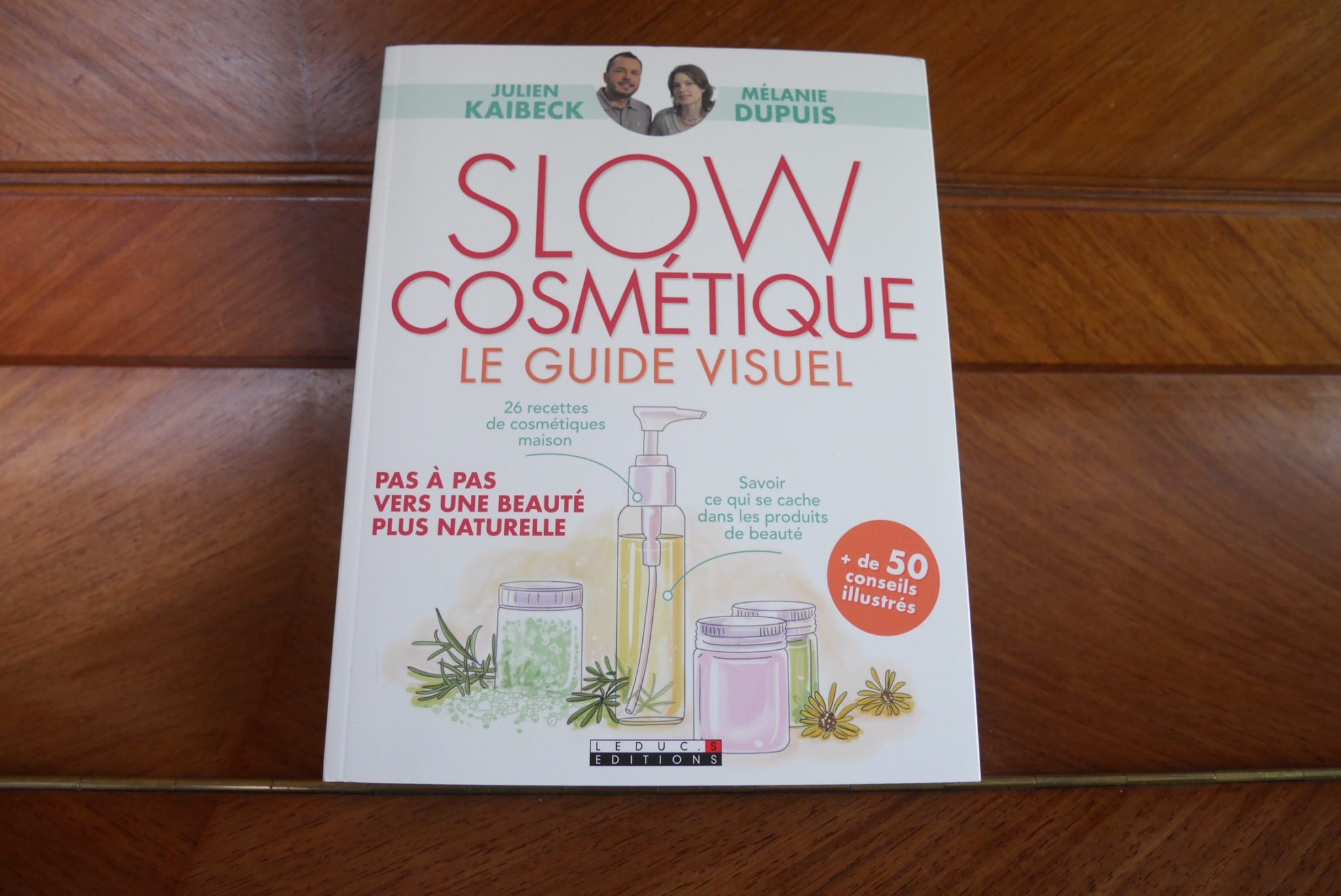
Recently, Julien Kaibeck, cosmetician & aromatologue released a great book about this new way of consuming beauty, it's called "Slow Cosmetics Visual Guide" is what has become a reference book for me. Once I have a question or a tip that I seek, I dive in!
IMG_0025
What I like best in the book:
  • A section to learn how to decipher the labels of cosmetics and understand the arguments misleading
  • A simple routine to follow step by step
  • The list of 10 essential ingredients  for a slow beauty essential oils, clays, vegetable oils ... everything I love!
  • Full of recipes to test to get into the cosmetic house
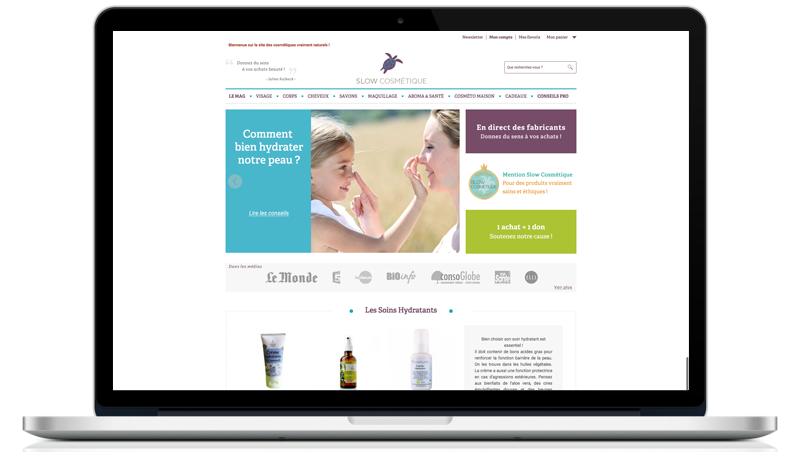
Associated with the release of the book, Julien also launching a market-square slow-cosmetique.com  where you will find lots of products in accordance with the principles of cosmetic slow!
SC-ILLUSTRATION-HOMEPAGE
If you want to place an order, you will receive 5% using code SLOWBLOG  during the validation of your basket and until May 20!
So tell me, cosmetics slow you think what? Ready to take the big step or you are already professional beauty without preservatives?😉